

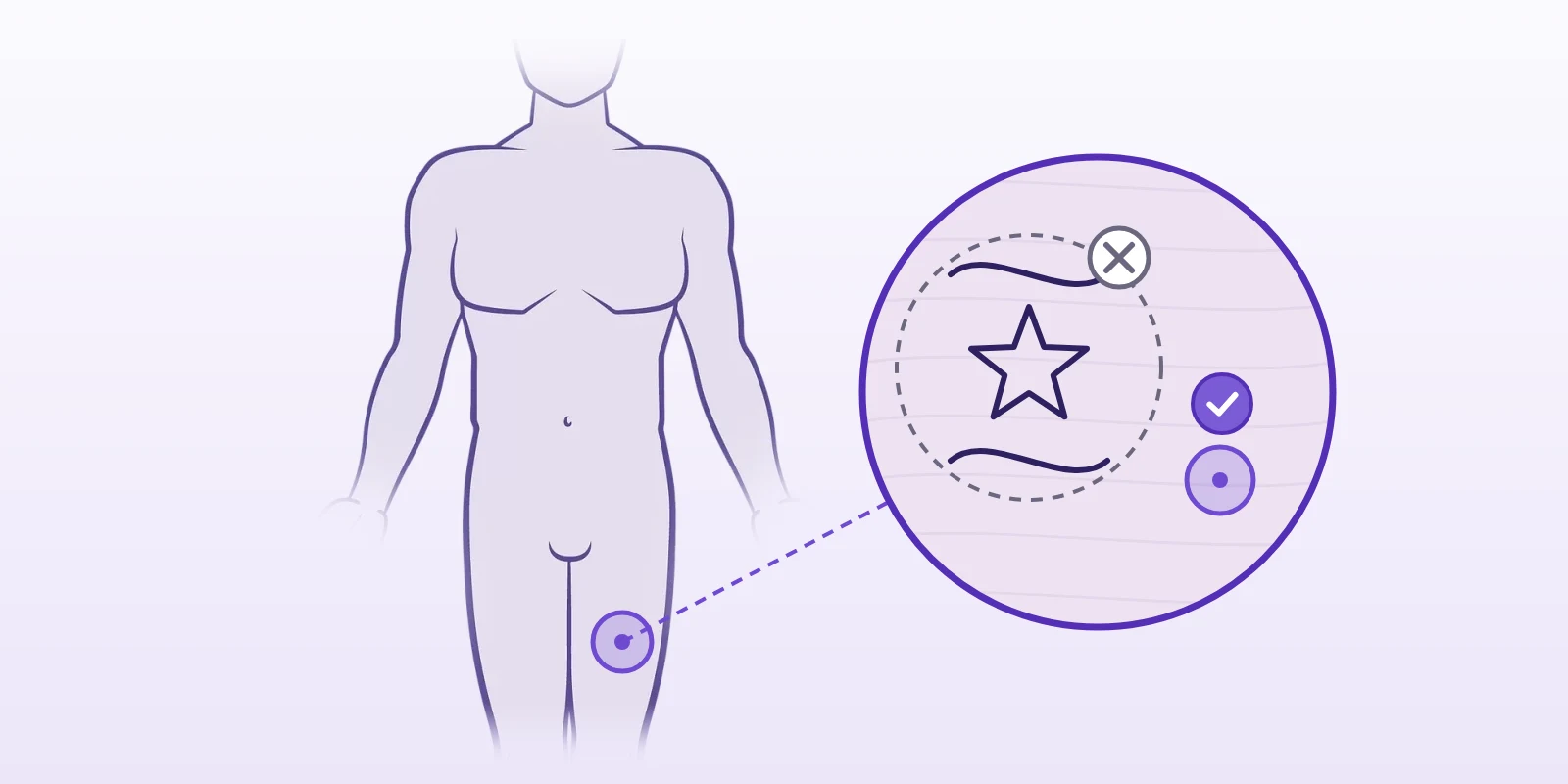
Can You Inject Into a Tattoo? What to Know About Tattooed Skin
Whether it's OK to give a subcutaneous injection through a tattoo, why fresh tattoos are off limits, why healed ink can hide problems, and how to plan your sites when a lot of your skin is tattooed.
If you have tattoos on your stomach, thighs or arms, you've probably wondered whether you can inject straight through them. Those are some of the most common subcutaneous (subQ) injection sites, and they're also popular places for ink.
The short answer: never inject into a new tattoo that's still healing. For older, fully healed tattoos, the usual advice is to choose plain skin when you can. Healed ink isn't known to be dangerous to inject through, but it can hide bruising, redness and lumps that you'd otherwise notice, and some tattooed skin is raised or scarred.
If most of your usual sites are tattooed, talk to your provider about which areas to use. Here's what to consider.
Fresh Tattoos: Wait Until They've Healed
A new tattoo is a wound. The skin has been punctured thousands of times, and it takes time to heal fully. Injecting into or right next to a healing tattoo raises the risk of infection and irritation, and can interfere with healing.
Treat a fresh tattoo the same way you'd treat any broken or irritated skin: leave it out of your rotation until it's fully healed. Ask your tattoo artist or provider how long that's likely to take for you, and if you're planning new ink, let your provider know so you can plan your sites around it.
Healed Tattoos: Why Plain Skin Is Usually Better
There's no strong evidence that injecting through a fully healed tattoo is harmful. But plain skin is still the better choice when you have it, for a few practical reasons.
Ink hides changes. Bruises, redness, small rashes and swelling are harder to see on tattooed skin, especially with dark or dense ink. Spotting an injection site reaction early is part of injecting safely.
Some tattooed skin is raised or scarred. Heavy linework, color packing or older tattoos can leave the skin thicker or scarred. Most injection guides say to avoid scar tissue, because medication may not absorb as expected.
It's harder to see your rotation. With plain skin, you can often see where you injected last. On busy tattoos, those marks blend in.
Which Skin to Avoid in General
Tattoos are one item on a longer list. Most injection guides say to skip these areas:
| Skin type | Inject here? | Why |
|---|---|---|
| Fresh or healing tattoo | No | Open wound, higher risk of infection |
| Healed, flat tattoo | Plain skin is better if you have it | Ink hides bruises and redness |
| Raised or scarred tattoo | Avoid | Scar tissue may affect absorption |
| Scars and stretch marks | Avoid | Tissue is different from normal fat |
| Moles and birthmarks | Avoid | Keep them clear so you can watch for changes |
| Bruised or irritated skin | Avoid until healed | More discomfort, harder to spot reactions |
| Firm or lumpy areas | Avoid and tell your provider | Can be a sign of overuse |
| Within about 2 inches of the belly button | Avoid | Commonly advised in subQ guides |
Optimize Your Peptide Therapy Journey
Take control of your peptide therapy with PeptideKit - the comprehensive app designed to help you track, monitor, and optimize your treatment:
- Add peptide therapy protocols with custom schedules that work for you
- Easy dose logging with customizable reminder notifications
- Body change tracking to monitor your transformation
- Progress visualization with charts and trend analysis

Scan with your iPhone camera
to download PeptideKit
Planning Your Sites Around Tattoos
If you're heavily tattooed, you may still have more usable skin than you think. A few ways to plan:
Map your plain skin. Look at each usual site (stomach, outer thighs, back of the upper arms) and note which areas are clear. Even small patches between pieces can work, as long as you can stay about an inch away from your last shot.
Use gaps and lighter areas. Unfilled background, skin between designs and lightly shaded areas are often easier to watch than solid black.
Skip tattooed zones in your rotation. The free injection site rotation chart lets you choose only the sites you want to use and builds a rotation from those, so tattooed areas simply aren't on the list.
Ask about other sites. If most of your usual sites are covered, your provider may be able to suggest other areas that suit your medication.
Rotate carefully. With fewer sites to choose from, rotation matters even more. Our guide on why you should rotate injection sites explains how overused spots can turn firm and lumpy over time.
If You Do Inject Into a Healed Tattoo
Sometimes plain skin isn't practical. If your provider is comfortable with you using a healed tattoo:
Our guide to lumps after an injection explains what's normal and what isn't.
Does Injecting Damage the Tattoo?
A single small subQ needle passes through the skin and into the fat beneath. It isn't designed to deposit or move ink the way a tattoo machine does. Most people don't notice any change to a healed tattoo from injections. That said, repeated injections into the same small area can cause the fat underneath to change, which could affect how the skin looks over time. Rotating your sites helps prevent that.
Track Which Sites You Use
With tattoos in the mix, it's easy to lose track of which areas you've used most. A printable injection log works, or PeptideKit lets you tap each site on a body map when you log a shot, so you can see your recent sites at a glance and keep tattooed zones out of the way.
Frequently Asked Questions
Can you inject into a tattoo?
You should never inject into a fresh, healing tattoo. For healed tattoos, plain skin is usually the better choice because ink can hide bruising and redness. Ask your provider if most of your sites are tattooed.
How long after getting a tattoo can I inject near it?
Wait until the tattoo is fully healed, and keep injections away from it until then. Healing time varies, so ask your provider or tattoo artist.
Is it bad to inject insulin or other medication through a tattoo?
There's no strong evidence that injecting through a healed, flat tattoo is harmful. The main concerns are that ink hides skin reactions and that raised or scarred tattoo skin may affect absorption.
Will injections ruin my tattoo?
A small subQ needle isn't designed to move tattoo ink, and most people notice no change. Rotating your sites helps prevent changes to the fat under the skin that could affect how an area looks over time.
What if all my usual injection sites are tattooed?
Look for plain patches between designs, and talk to your provider, who may suggest other suitable areas. A rotation chart that uses only your chosen sites can help.
The Bottom Line
Never inject into a tattoo that's still healing. With healed tattoos, plain skin is usually better, mostly because ink makes it harder to spot bruising, redness and lumps.
If much of your skin is tattooed, map the clear areas you have, build a rotation around them and talk to your provider about other options.
Always consult with qualified healthcare professionals before starting any peptide therapy protocol. This information is for educational purposes only and does not constitute medical advice.
Related Articles
Why Do Injections Sting? Common Causes and Simple Fixes
Stinging or burning during a shot often comes down to temperature, technique or the medication itself. The common causes, what you can change, and when to mention it to your provider.
Bruising After an Injection: Why It Happens and How to Prevent It
A small bruise after a shot usually means the needle nicked a tiny blood vessel. Why some injections bruise, how long the mark lasts, what helps, and when a bruise is worth a call to your provider.