

Back to Blog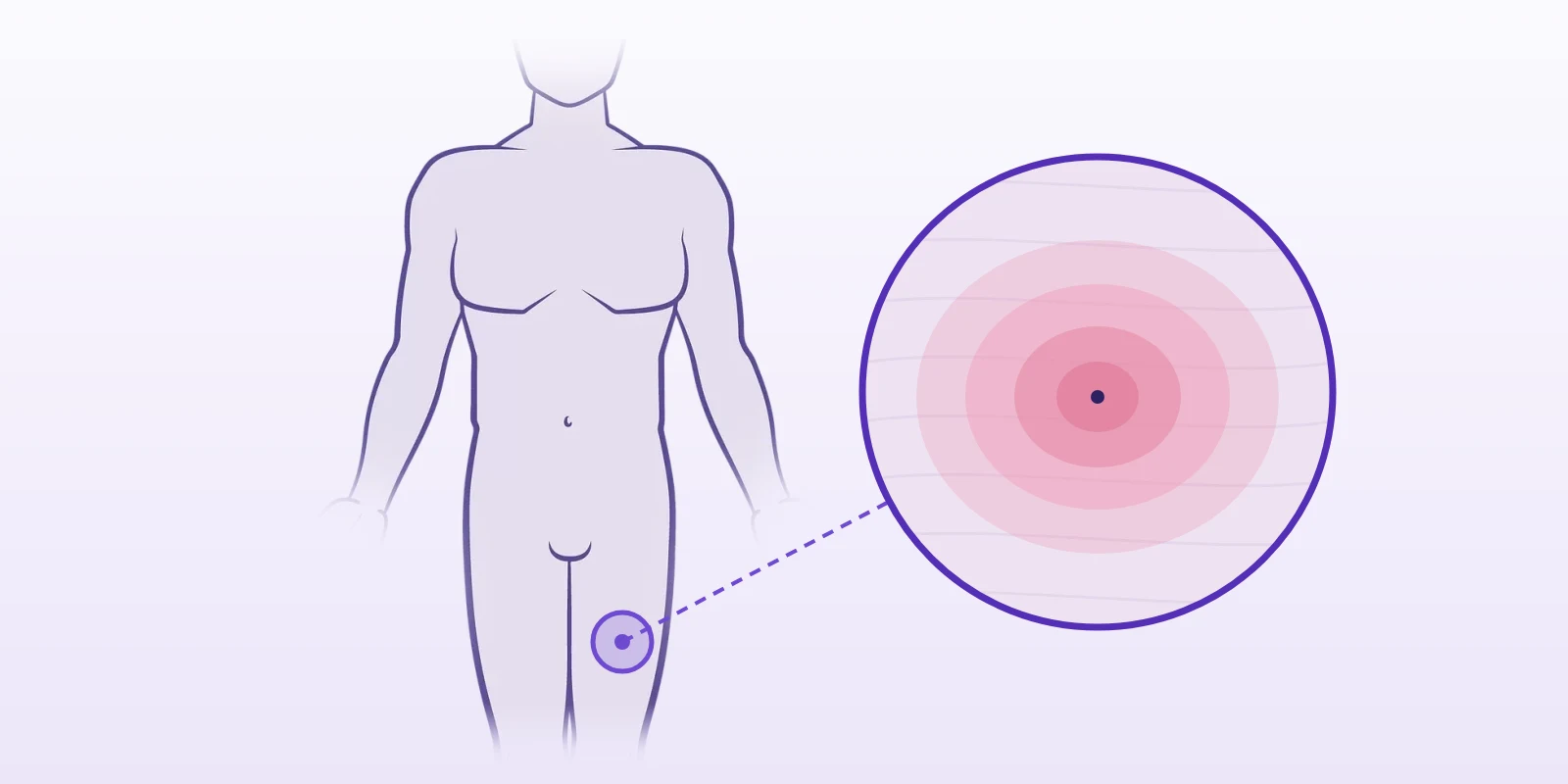
Injection Site Reaction: Redness, Itching and Swelling Explained
November 18, 2026
7 min read
Monica Hodgson
injection-site-reactions
peptide-safety
peptide-therapy
Red, itchy or swollen skin around an injection is common and usually mild. How to tell a normal reaction from an infection or allergy, what helps, and how to make reactions less likely.
A few hours after your shot, the skin around it turns pink, feels a bit warm and starts to itch. By the next day it might be a raised patch about the size of a coin.
This is called an injection site reaction, and it's one of the most common side effects of injectable medications. It's your body's local response to a needle and a substance going under the skin. Most reactions are mild, stay in one small area and settle on their own within a few days.
What matters is knowing which reactions are normal, which ones point to an infection or an allergy, and when to pick up the phone. That's what this guide covers.
What an Injection Site Reaction Looks Like
A typical reaction shows up at the spot where the needle went in, usually within minutes to a day or so. You might notice one or more of these:
Your medication's patient leaflet usually lists injection site reactions under side effects if they're common for that product. It's worth a read so you know what to expect.
Normal Reaction, Infection or Allergy?
These three can look similar at first. The table below shows the differences most people use to tell them apart. It's a guide, not a diagnosis, so if you're unsure, ask your provider.
| Normal local reaction | Possible infection | Possible allergic reaction | |
|---|---|---|---|
| When it starts | Minutes to a day after the shot | Often a day or more after, then worsens | Can be within minutes or hours |
| Where | Stays around the injection site | Starts at the site and spreads | Can spread beyond the site or across the body |
| How it changes | Settles over a few days | Gets redder, hotter and more painful | May include hives elsewhere |
| Other signs | None | Pus, red streaks, fever, chills | Trouble breathing, swelling of face, lips or throat, dizziness |
| What to do | Comfort care and watch it | Call your provider promptly | Get emergency help for breathing or swelling symptoms |
What Usually Helps
For a mild, local reaction, simple comfort care is usually enough:
Why Some Injections Cause Reactions
There are a few common reasons:
How to Make Reactions Less Likely
Let the medication warm up to room temperature before injecting, but only if your label says it's OK to keep it out of the fridge for a while.
Swab and wait. Clean the skin and let it dry completely.
Rotate your sites. Each new injection should be at least an inch from the last. Our guide on why rotating injection sites matters explains what happens when you don't.
Inject into healthy skin. Skip areas that are bruised, scarred, broken, irritated or still reacting from a previous shot.
Use a new needle each time and the technique you were taught.
Optimize Your Peptide Therapy Journey
Take control of your peptide therapy with PeptideKit - the comprehensive app designed to help you track, monitor, and optimize your treatment:
- Add peptide therapy protocols with custom schedules that work for you
- Easy dose logging with customizable reminder notifications
- Body change tracking to monitor your transformation
- Progress visualization with charts and trend analysis
Download PeptideKit App
Scan with your iPhone camera
to download PeptideKit
Keep a Simple Reaction Record
If you get reactions often, write down a few details each time:
A record makes it much easier for your provider to tell whether a reaction is getting worse over time, and whether it's linked to a particular site or batch. A printable injection log has room for notes like these, and our guide to what to record in an injection log covers the rest.
If you'd rather use your phone, PeptideKit lets you log the site on a body map with each shot and add notes, so you can look back and see where reactions happened.
When to Call Your Provider
Contact your provider if:
Call emergency services right away if you have trouble breathing, swelling of your face, lips, tongue or throat, a racing heart, or feel faint after an injection.
Related Reactions
Injection site reactions often overlap with other things you might notice. These guides cover them in more detail:
Frequently Asked Questions
What is an injection site reaction?
It's a local response at the spot where you injected, such as redness, swelling, itching, warmth or tenderness. It's common with many injectable medications and is usually mild.
How long does an injection site reaction last?
Most mild reactions settle within a few days. If yours is spreading, getting worse or hasn't improved after several days, contact your provider.
How can I tell if my injection site is infected?
Signs that point to infection include redness and warmth that keep spreading, increasing pain, red streaks, pus and fever. A normal reaction usually stays small and improves over a few days.
Is it normal for my injection site to itch?
Mild itching is a common part of an injection site reaction. Try a cool compress and avoid scratching. If itching spreads beyond the site or comes with hives, contact your provider.
Should I keep injecting if I get reactions?
Don't stop or change a prescribed medication without talking to your provider. Tell them about the reactions, ideally with notes on when and where they happened.
Can I prevent injection site reactions?
You can make them less likely by letting the skin dry after swabbing, rotating sites, using a new needle each time, injecting into healthy skin and letting the medication warm up if your label allows.
The Bottom Line
A small red, itchy or swollen patch around an injection is common and usually settles within a few days. Keep it cool, don't scratch, and choose a different spot next time.
Know the warning signs too. Spreading redness, pus, red streaks or a fever need a call to your provider, and any trouble breathing or facial swelling needs emergency help.
Always consult with qualified healthcare professionals before starting any peptide therapy protocol. This information is for educational purposes only and does not constitute medical advice.
Related Articles
Bruising After an Injection: Why It Happens and How to Prevent It
A small bruise after a shot usually means the needle nicked a tiny blood vessel. Why some injections bruise, how long the mark lasts, what helps, and when a bruise is worth a call to your provider.
Lump After an Injection: Is a Bump Under the Skin Normal?
Why a small lump can appear after a subcutaneous injection, how long it usually lasts, what helps it settle, and the signs that mean you should call your provider.