

Back to Blog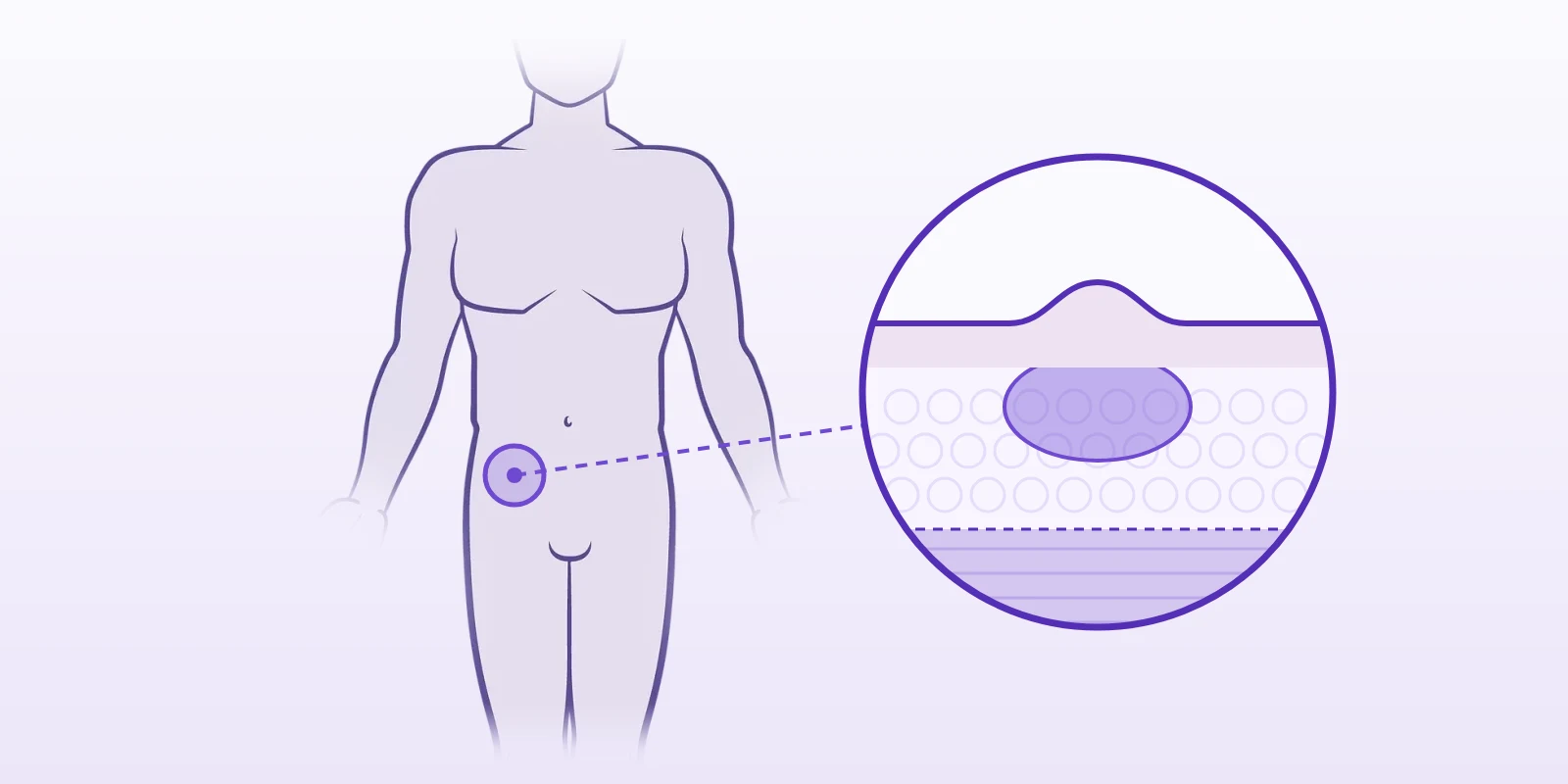
Lump After an Injection: Is a Bump Under the Skin Normal?
November 16, 2026
8 min read
Monica Hodgson
injection-site-reactions
injection-sites
peptide-therapy
Why a small lump can appear after a subcutaneous injection, how long it usually lasts, what helps it settle, and the signs that mean you should call your provider.
You finish your injection, glance down, and there's a small bump where the needle went in. It might be soft, it might be a little raised, and it might still be there an hour later.
In most cases, a small soft lump right after a subcutaneous (subQ) injection is normal. The medication sits in the fat under your skin for a while before your body absorbs it, and that little pocket of liquid can show up as a bump. It usually fades within a few hours to a day or two.
A lump that's hot, painful or growing is different. So is a firm, rubbery patch that builds up over weeks of using the same area. This guide covers the common kinds of lumps, why they happen, what helps, and when to call your provider.
Why a Lump Forms After an Injection
A subQ injection puts liquid into the layer of fat between your skin and your muscle. That liquid needs somewhere to go, so it forms a small pocket that slowly spreads out and gets absorbed. Until it does, you may see or feel it.
A few things make a bump more noticeable:
What Kind of Lump Is It?
This table is a starting point, not a diagnosis. It can help you describe what you're seeing when you talk to your provider or pharmacist.
| What you notice | Common cause | What usually happens |
|---|---|---|
| Soft bump right after the shot, not painful | Liquid sitting in the fat | Fades within hours to a day or two |
| Pale, raised bump that looks like a blister | Injection went too shallow, into the skin | Fades, but mention it so your technique can be checked |
| Tender lump with a bruise | Small bleed under the skin | Bruise fades over a week or two |
| Red, itchy, raised patch a few hours later | Local reaction to the injection | Usually settles over a few days |
| Firm, rubbery patch after weeks in one area | Lipohypertrophy from repeated injections | Can last weeks or months, so rest the area |
| Hot, painful, growing lump, pus or fever | Possible infection | Call your provider promptly |
What Usually Helps
For a small, painless bump, the best thing is often nothing at all. Leave it alone and it'll usually absorb on its own.
A few things can make it more comfortable:
Can You Prevent Lumps After Injections?
You can't always avoid a small bump, but these habits make them less likely:
Optimize Your Peptide Therapy Journey
Take control of your peptide therapy with PeptideKit - the comprehensive app designed to help you track, monitor, and optimize your treatment:
- Add peptide therapy protocols with custom schedules that work for you
- Easy dose logging with customizable reminder notifications
- Body change tracking to monitor your transformation
- Progress visualization with charts and trend analysis
Download PeptideKit App
Scan with your iPhone camera
to download PeptideKit
Lumps That Build Up Over Time
There's one kind of lump that's worth taking seriously even though it doesn't hurt. If you inject into the same small area again and again, the fat there can thicken into a firm, rubbery patch. This is called lipohypertrophy.
It often feels less sensitive than the skin around it, which is exactly why people keep using it. The catch is that medication injected into those patches may be absorbed less predictably. If you find one, stop using that spot and let your provider take a look. Our guide on why you should rotate injection sites explains how it happens and how a rotation plan prevents it.
When a Lump Is a Reason to Call Your Provider
Get in touch with your healthcare provider if a lump:
Get urgent help for signs of an allergic reaction, such as trouble breathing, swelling of your face, lips or throat, or hives across your body.
Did the Medication Still Work?
A bump right after a subQ injection usually means the medication is exactly where it's meant to be: in the fat, waiting to be absorbed. It's not a sign that the dose was lost.
If you're ever unsure whether you got your full dose, for example because liquid leaked back out of the skin, don't take another one to make up for it. Note what happened and ask your pharmacist what to do.
Keep a Record of Your Sites
The easiest way to stop lumps from becoming a pattern is to know where every shot went. A paper printable injection log works, and our injection site rotation chart plans your next spot for you. If you'd rather use your phone, PeptideKit lets you tap the site on a body map each time you log a shot, so you can see at a glance where the last few went.
Frequently Asked Questions
Is it normal to have a lump after a subcutaneous injection?
Yes, a small soft lump right after a subQ injection is common. It's usually the liquid sitting in the fat layer before it's absorbed, and it tends to fade within a few hours to a day or two.
How long does a lump from an injection last?
Most small bumps go down within a day or two. A lump caused by a small bleed can take a week or two to fade along with the bruise. A firm patch from repeated injections in one area can last weeks or months.
Should I massage a lump after an injection?
Check your medication's leaflet first, because some say not to rub or massage the site. If you're unsure, leave it alone and ask your pharmacist.
Why is there a hard lump at my injection site weeks later?
A firm or rubbery patch that develops over weeks is often lipohypertrophy, caused by injecting into the same area too often. Stop using that spot and have your provider check it.
Does a lump mean I did the injection wrong?
Not usually. Many lumps just mean the medication is sitting in the fat. A pale, blister-like bump can mean the injection was too shallow, so mention it to your provider or pharmacist so they can check your technique.
When should I worry about a lump after an injection?
Call your provider if the lump is growing, hot, very painful, leaking pus, has red streaks, or comes with a fever. Get emergency help for trouble breathing or swelling of the face or throat.
The Bottom Line
A small, soft lump after a subQ injection is usually just the medication waiting to be absorbed, and it fades on its own. Leave it alone, use a different spot next time and write down where it happened.
Watch for the warning signs (heat, spreading redness, pus, fever or a lump that keeps growing) and call your provider if you see them. For lumps that build up slowly, the fix is a steady rotation, and a rotation chart makes that easy.
Always consult with qualified healthcare professionals before starting any peptide therapy protocol. This information is for educational purposes only and does not constitute medical advice.
Related Articles
Injection Sites and Needle Sizes: Gauge and Length Charts for SubQ and IM
How needle gauge and length work, which needle sizes go with subcutaneous and intramuscular injection sites, and how to read the numbers on the box. Charts for subQ, IM and mm to inch conversions.
IM Injection Sites: Where Intramuscular Shots Go (With Diagram)
The main intramuscular (IM) injection sites with a labeled diagram: deltoid, ventrogluteal, vastus lateralis and dorsogluteal. How each one is found, which are safest, and how IM differs from subQ.