

Bleeding After an Injection: Is a Drop of Blood Normal?
A small drop of blood after a shot is common and usually stops in seconds. Why it happens, what to do, whether you lost any medication, and when bleeding is a reason to call your provider.
You pull the needle out and a small red bead appears on your skin. Maybe it's a single drop, maybe it's a little more than usual.
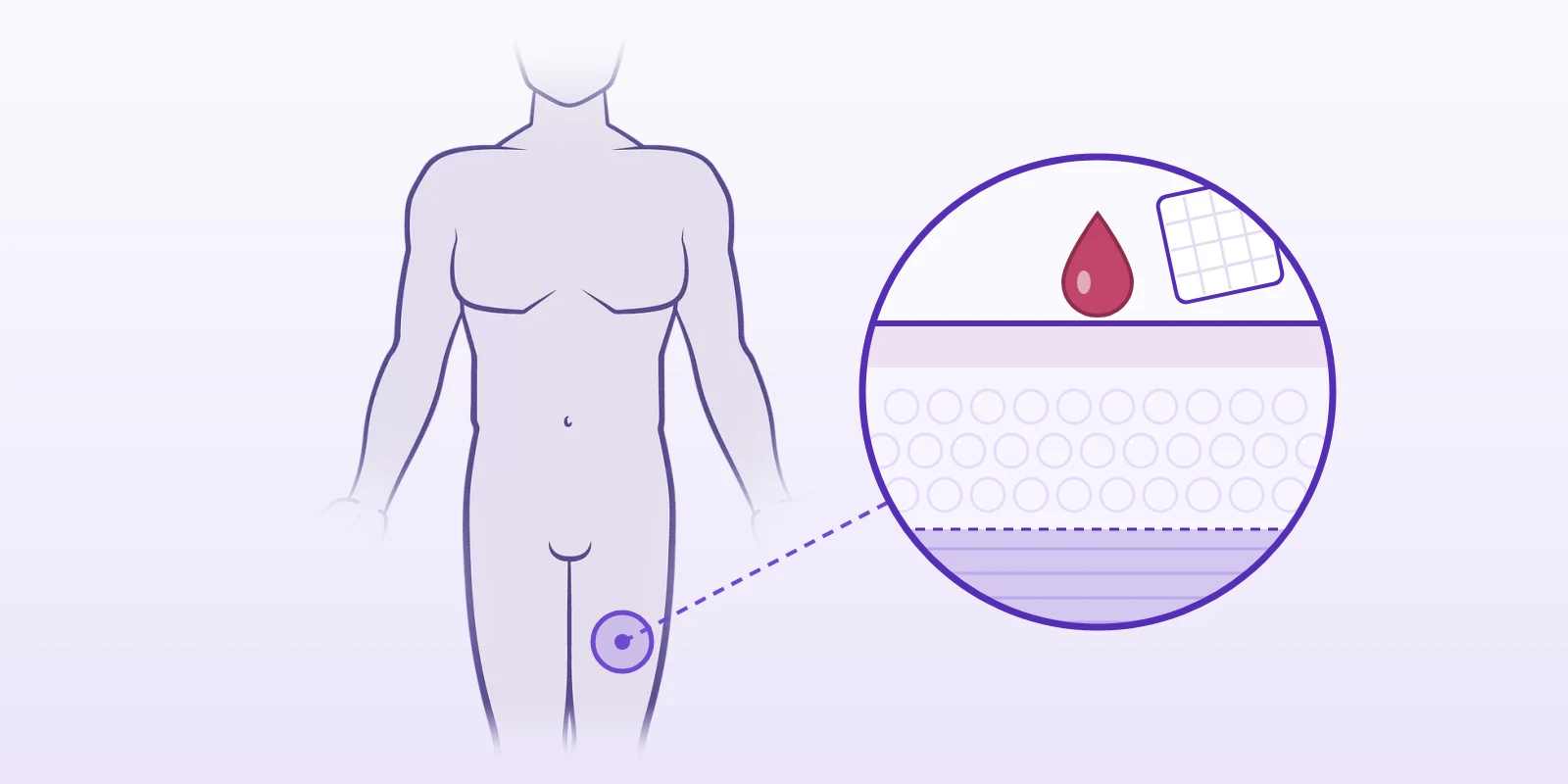
A drop of blood after an injection is common and almost never a problem. The needle passed through one of the tiny blood vessels just under your skin, and a little blood followed it back out. Pressing gently on the spot for a few seconds is usually all it takes to stop it.
It's also natural to wonder whether some of your medication came out with it. This guide covers why it happens, what to do, how to tell blood from leaked medication, and when bleeding is worth a call to your provider.
Why Injections Sometimes Bleed
Your skin and the fat beneath it are full of very small blood vessels called capillaries. You can't see them, so you can't always avoid them. When the needle passes through one, a little blood can escape:
Some things make bleeding more likely:
Don't stop any prescribed medicine because of injection bleeding. If you think a medicine is the cause, talk to your provider.
What to Do When It Bleeds
MedlinePlus, the U.S. National Library of Medicine's health site, suggests pressing a piece of gauze over the site for a few seconds after the injection if there's any bleeding. In practice:
That's it. Most injection bleeding stops very quickly.
What You See and What It Usually Means
| What you see | What it usually means |
|---|---|
| A tiny red dot or single drop | Needle passed through a small blood vessel. Normal |
| A drop of clear or slightly cloudy liquid | Some medication leaked back out of the skin |
| Blood mixed with clear liquid | A bit of both. Usually small amounts |
| Bleeding that keeps going despite pressure | Worth a call to your provider |
| A bruise appearing later | Blood collected under the skin. Usually fades in a week or two |
Did I Lose Some of My Medication?
A small drop of blood doesn't usually mean you lost your dose. The blood comes from a vessel near the surface, while the medication is deeper, in the fat.
Clear liquid at the site is different. That's more likely medication leaking back out along the needle's path, sometimes called leakback. It can happen if you pull the needle out quickly, inject into a very shallow layer or inject a larger amount.
Either way, don't take another dose to make up for it. Note what happened in your log, and if you're worried you lost a meaningful amount, ask your pharmacist what to do. Some instructions suggest keeping the needle in place for a few seconds after you finish pushing the plunger, so the liquid has time to settle. Follow whatever your label or pharmacist tells you.
Optimize Your Peptide Therapy Journey
Take control of your peptide therapy with PeptideKit - the comprehensive app designed to help you track, monitor, and optimize your treatment:
- Add peptide therapy protocols with custom schedules that work for you
- Easy dose logging with customizable reminder notifications
- Body change tracking to monitor your transformation
- Progress visualization with charts and trend analysis

Scan with your iPhone camera
to download PeptideKit
How to Reduce Bleeding
You can't avoid every blood vessel, but these habits help:
Bleeding and Bruising Go Together
If you see a drop of blood, you may also see a small bruise over the next day or two. That's the same nicked vessel, with some blood staying under the skin rather than coming out. Our guide to bruising after an injection explains how long bruises last and what helps.
If a firm, tender lump forms instead, see our guide to lumps after an injection.
When to Call Your Provider
Contact your provider if:
Call emergency services for heavy bleeding that won't stop, or for signs of an allergic reaction such as trouble breathing or swelling of the face or throat.
Keep a Note of It
If bleeding happens often, write down the date, site and anything that was different that day. A pattern, like one site that always bleeds, is easy to spot in a log and easy to fix. A printable injection log works well for this, or PeptideKit lets you note it next to the site you tapped on the body map.
Frequently Asked Questions
Is it normal to bleed after an injection?
Yes. A small drop of blood is common. It means the needle passed through a tiny blood vessel under the skin, and it usually stops within seconds with gentle pressure.
What should I do if my injection site is bleeding?
Press gently with clean gauze or a cotton ball for a few seconds, without rubbing. Add a small bandage if you like.
Does bleeding mean I lost my medication?
A small drop of blood usually doesn't. Clear liquid at the site is more likely leaked medication. Don't take another dose to make up for it. Ask your pharmacist if you're concerned.
Why do some of my injections bleed and others don't?
It depends on whether the needle happens to pass through a small blood vessel, which you can't see. Some areas have more vessels near the surface than others.
When should I worry about bleeding after an injection?
Call your provider if bleeding doesn't stop after several minutes of pressure, if it happens at most injections, or if you're bruising or bleeding easily elsewhere.
The Bottom Line
A drop of blood after an injection is common and harmless. Press gently for a few seconds, don't rub, and use a different spot next time.
A small amount of blood doesn't mean you lost your dose, so don't take more to make up for it. And if bleeding becomes frequent, heavy or hard to stop, let your provider know.
Always consult with qualified healthcare professionals before starting any peptide therapy protocol. This information is for educational purposes only and does not constitute medical advice.
Related Articles
Why Do Injections Sting? Common Causes and Simple Fixes
Stinging or burning during a shot often comes down to temperature, technique or the medication itself. The common causes, what you can change, and when to mention it to your provider.
Bruising After an Injection: Why It Happens and How to Prevent It
A small bruise after a shot usually means the needle nicked a tiny blood vessel. Why some injections bruise, how long the mark lasts, what helps, and when a bruise is worth a call to your provider.