

Back to Blog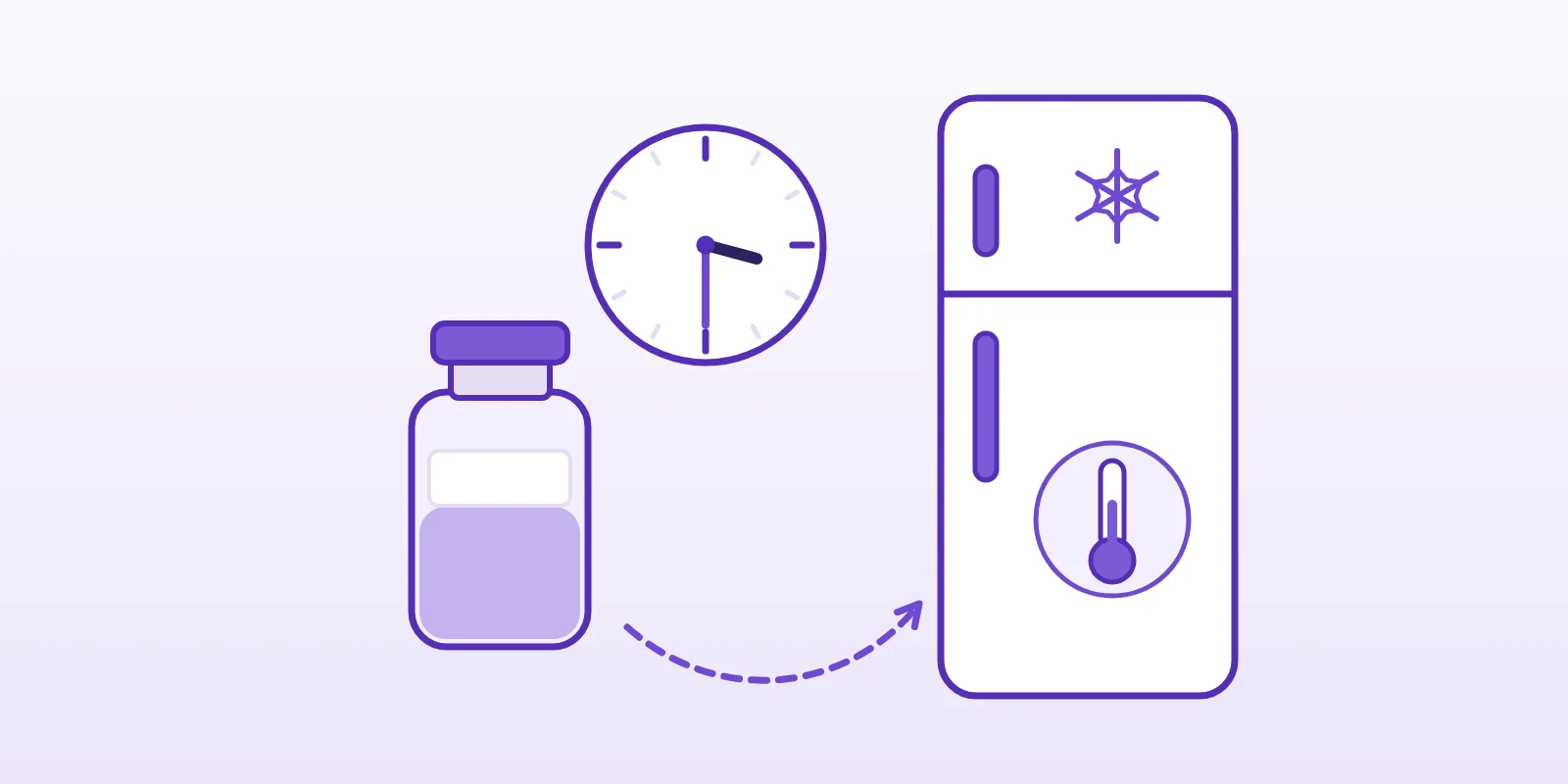
Left Your Injectable Medication Out of the Fridge? What to Do
November 24, 2026
6 min read
Monica Hodgson
storage
peptide-safety
peptide-therapy
Found your vial or pen on the counter instead of in the fridge? Here's what to do first, what to write down, who to call and how to stop it happening again.
You open the cupboard in the morning and there it is: the vial or pen that should have been in the fridge, sitting out all night. Or a delivery was left on the doorstep in the sun. Or the power went out.
Your first instinct might be to put it back and carry on as if nothing happened, or to throw it away immediately. Neither is the best first move.
If refrigerated medication has been left out, don't use it until you've checked. Put it back in the fridge, set apart and labeled so you don't use it by accident, note how long it was out and how warm it got, then check the leaflet or call your pharmacist.
Some medications can handle time at room temperature, and some can't. Only your label or your pharmacist can tell you which yours is.
Step 1: Don't Use It Yet
Even if it looks completely normal, hold off. A medication can lose strength without any visible change. That's the key point: looking fine doesn't prove it's fine.
Step 2: Put It Back in the Fridge, Set Apart
Return it to the fridge so it doesn't spend any more time warm. Keep it separate from your other medication, for example in a bag with a note saying "don't use, checking," so nobody picks it up by mistake while you find out.
If it was frozen rather than left warm, the same rule applies: don't use it until you've checked. Many refrigerated medications shouldn't be used at all once they've frozen, even after they thaw.
Step 3: Write Down What Happened
The person you ask will want details, and they're easy to forget. Note:
| Detail | Why it matters |
|---|---|
| Medication name and strength | Each product has its own stability information |
| Lot number and expiration date | On the label or box. The manufacturer may ask for them |
| Roughly how long it was out | An hour and a weekend are very different |
| How warm it got | Room temperature, a hot car and direct sun are very different |
| Whether it was in its box | Some medications are sensitive to light as well as heat |
| Whether it was unopened or in use | Rules can differ for opened and unopened products |
| Whether it froze | Freezing is often treated more strictly than warmth |
| Anything that looks different | Cloudiness, particles or a change in color |
Step 4: Check the Leaflet
Many medication leaflets have a storage section that says how long the product can be kept at room temperature, if at all, and what to do if it's been stored wrong. Some products are allowed to sit out for a set number of days. Others need to stay cold the whole time.
If the leaflet answers your question clearly, follow it. If it doesn't, or your situation doesn't quite match, move on to the next step.
Optimize Your Peptide Therapy Journey
Take control of your peptide therapy with PeptideKit - the comprehensive app designed to help you track, monitor, and optimize your treatment:
- Add peptide therapy protocols with custom schedules that work for you
- Easy dose logging with customizable reminder notifications
- Body change tracking to monitor your transformation
- Progress visualization with charts and trend analysis
Download PeptideKit App
Scan with your iPhone camera
to download PeptideKit
Step 5: Call Your Pharmacist or the Manufacturer
Your pharmacist can usually tell you whether the medication is still usable, or find out. Many manufacturers also have a medical information phone line listed on their website or in the leaflet, and they often have stability data that isn't printed anywhere.
Give them the details you wrote down. If the answer is that it's no longer usable, ask how to dispose of it safely and whether a replacement can be arranged.
Signs Something's Wrong
If you notice any of these, don't use the medication, whatever happened to it:
Our guide to cloudy peptide vials covers what to look for in more detail. Remember, though, that the absence of these signs doesn't prove a warm medication is still good.
What About Mixed Vials?
If you mix (reconstitute) your medication yourself, a mixed vial may be less forgiving than an unmixed one, and it already has a limited life once mixed. Treat a warm mixed vial the same way: don't use it until you've checked. Our guide to how long a mixed vial lasts explains why mixed vials have their own rules.
How to Stop It Happening Again
Make putting it back part of the routine. Return the medication to the fridge before you do anything else, even before disposing of the needle.
Give it a fixed spot. A labeled container on a middle shelf is easy to check at a glance. Our guide to storing injectable medication at home covers where in the fridge works best.
Put a thermometer in the fridge. A cheap fridge thermometer tells you if the fridge itself is running too warm or too cold.
Plan deliveries. Ask for refrigerated deliveries on days someone is home, and bring them inside straight away.
Plan for trips. Our guide to traveling with injectable medication covers cool bags and what to do when you don't have a fridge.
Keep a little buffer. If you have to throw a vial away, having your next one already on hand stops a storage mistake turning into a missed shot. The free supply calculator helps you see when you'll need to reorder.
Recording It
Note what happened and what you were told in your log. If you later notice a change in how you feel, that record helps your prescriber work out whether the storage problem could be related. PeptideKit lets you add notes alongside the shots you log, so details like this stay with the rest of your history.
Frequently Asked Questions
Is my medication still good if I left it out of the fridge overnight?
It depends on the medication. Some can be kept at room temperature for a while and some can't. Don't use it until you've checked the leaflet or asked your pharmacist.
Can I put medication back in the fridge after it's been left out?
Yes, put it back so it doesn't stay warm, but keep it separate and don't use it until you've checked whether it's still usable.
What if my medication froze?
Don't use it until you've checked. Many refrigerated medications shouldn't be used after freezing, even once they've thawed.
How can I tell if my medication has gone bad?
Cloudiness, particles, color changes or a damaged container are warning signs. But medication can lose strength without looking any different, so appearance alone doesn't prove it's fine.
Who should I call if I left my medication out?
Your pharmacist is usually the best first call. The manufacturer's medical information line can also tell you about their product's stability.
The Bottom Line
If refrigerated medication has been left out, pause before deciding anything. Put it back in the fridge, set apart and labeled, write down how long it was out and how warm it got, then check the leaflet or call your pharmacist.
Some products cope fine with time at room temperature and some don't, and looking normal isn't proof either way. A two-minute phone call is worth it.
Always consult with qualified healthcare professionals before starting any peptide therapy protocol. This information is for educational purposes only and does not constitute medical advice.
Related Articles
Injection Site Reaction: Redness, Itching and Swelling Explained
Red, itchy or swollen skin around an injection is common and usually mild. How to tell a normal reaction from an infection or allergy, what helps, and how to make reactions less likely.
Bacteriostatic Water vs Sterile Water for Peptides: What's the Difference?
Bacteriostatic water and sterile water look identical, but they behave very differently once a vial is opened. Which one peptides need, how long each lasts, and what never to use.