

Back to Blog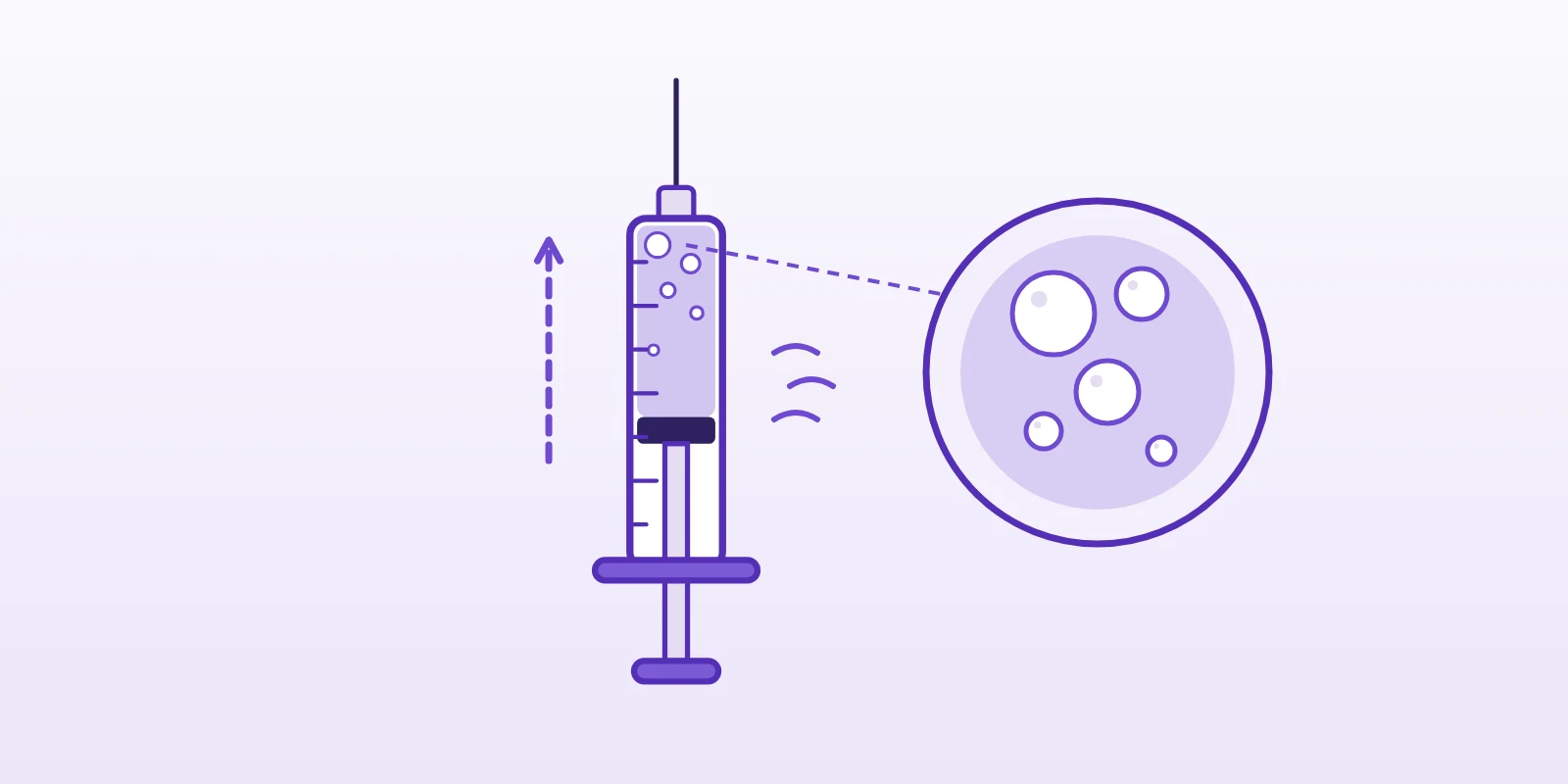
Air Bubbles in Your Syringe: Are They Dangerous?
November 26, 2026
7 min read
Monica Hodgson
syringes
injection-technique
peptide-therapy
Why air bubbles end up in a syringe, whether a small one under the skin is harmful, why they still matter for getting the right amount and how to get rid of them.
You've drawn up your injection, held the syringe up to check it and spotted a bubble. Maybe a tiny one clinging to the side, maybe a bigger pocket of air at the top. Now you're wondering whether it's safe to go ahead.
It's a very common worry, partly because of films where an air bubble in a syringe is treated as deadly.
A small air bubble injected under the skin or into muscle is generally not considered dangerous. The bigger issue is that air takes up space in the syringe, so a large bubble can mean you get less medication than you should. That's why it's worth removing bubbles before you inject.
Here's why bubbles form, why they matter and how to get rid of them.
Why Small Bubbles Under the Skin Aren't the Danger You've Heard About
The serious risk people have in mind, called an air embolism, involves air getting into a blood vessel, usually in large amounts through an IV line into a vein. Subcutaneous and intramuscular injections don't go into a vein, and the amount of air in a small syringe bubble is tiny by comparison.
Health guidance on self-injection generally says that injecting a small bubble into the skin or muscle is usually harmless. That's reassuring, but it's not a reason to ignore bubbles, for the reason below.
Why Bubbles Still Matter: The Amount
A syringe measures volume. If part of that volume is air, there's less room for medication.
| What's in the syringe | What you actually get |
|---|---|
| Medication drawn to the right line, no bubbles | The amount you meant to inject |
| A tiny bubble clinging to the side | Very slightly less, usually negligible |
| A large bubble or air gap | Noticeably less medication than the line shows |
Why Bubbles Form
Bubbles almost always come from the drawing-up process:
Our guide to drawing medication from a vial covers the technique that avoids most of these.
How to Get Rid of Air Bubbles
If you're drawing from a vial, do it while the needle is still in the upside-down vial:
If the needle is already out of the vial, or you're using a prefilled syringe:
If pushing the air out leaves you short, you may need to draw a little more from the vial. Don't try to add medication to a prefilled syringe. Follow the leaflet for your device.
Optimize Your Peptide Therapy Journey
Take control of your peptide therapy with PeptideKit - the comprehensive app designed to help you track, monitor, and optimize your treatment:
- Add peptide therapy protocols with custom schedules that work for you
- Easy dose logging with customizable reminder notifications
- Body change tracking to monitor your transformation
- Progress visualization with charts and trend analysis
Download PeptideKit App
Scan with your iPhone camera
to download PeptideKit
Stubborn Tiny Bubbles
Very small bubbles sometimes cling to the inside of the barrel and won't move however much you tap. A few things help:
If a pinhead-sized bubble remains after a couple of tries, many people go ahead, since its effect on the amount is negligible. If you're unsure whether a bubble is small enough to ignore, ask your pharmacist to show you what's acceptable for your syringe.
Pens and Prefilled Devices
Pens and autoinjectors usually have their own process for dealing with air, often called priming or a safety check, where you push out a small amount before each injection. If your device uses one, follow the leaflet exactly. Don't apply syringe techniques to a pen unless the instructions say to.
What If You Already Injected a Bubble?
If it was a small bubble under the skin, it's generally nothing to worry about. You might feel a slight pop or a little extra pressure, and you might notice a small amount of medication leak back out of the site.
What you shouldn't do is take another injection to make up for the amount the bubble displaced. Instead:
Our guide to what to record in an injection log explains why notes like this are useful. PeptideKit lets you add notes to each shot you log, so small details like this aren't lost.
Getting the Amount Right
Clearing bubbles is one half of accurate measuring. The other half is reading the syringe correctly. Our syringe units guide explains how to read the markings, and our step-by-step guide to giving yourself a subcutaneous injection shows where the bubble check fits into the routine.
Frequently Asked Questions
Is it dangerous to inject a small air bubble under the skin?
A small air bubble injected under the skin or into muscle is generally not considered dangerous. The main problem with bubbles is that they reduce the amount of medication in the syringe.
Why do air bubbles matter in a syringe?
Air takes up space, so a large bubble means less medication than the syringe markings suggest.
How do I get air bubbles out of a syringe?
Hold the syringe with the needle up, tap the barrel so the bubbles rise, then push the plunger gently until the air is out. Check that the amount is still right afterward.
Why do I keep getting air bubbles in my syringe?
Usually from pulling the plunger back too fast, the needle tip slipping out of the liquid, or not adding air to the vial first. Drawing slowly helps most.
Should I take more medication if I injected an air bubble?
No. Don't take an extra injection to make up the difference. Write it down, and call your pharmacist if you're worried you got much less than you should have.
The Bottom Line
A small air bubble under the skin is generally harmless. The real reason to remove bubbles is accuracy: air takes up space, and a big bubble means less medication.
Draw slowly, keep the needle tip in the liquid, tap the bubbles to the top and push them out before you inject. And if one slips through, don't make up for it with an extra shot. Write it down and ask your pharmacist if you're worried.
Always consult with qualified healthcare professionals before starting any peptide therapy protocol. This information is for educational purposes only and does not constitute medical advice.
Related Articles
How to Draw Medication From a Vial Into a Syringe
A step-by-step guide to drawing medication from a vial: checking the vial, cleaning the top, adding air, drawing the right amount and getting rid of bubbles.
How to Give Yourself a Subcutaneous Injection, Step by Step
A plain walkthrough of a subcutaneous (subQ) self-injection at home: what to lay out, how to choose and clean the site, how to insert the needle and what to do afterward.