

Back to Blog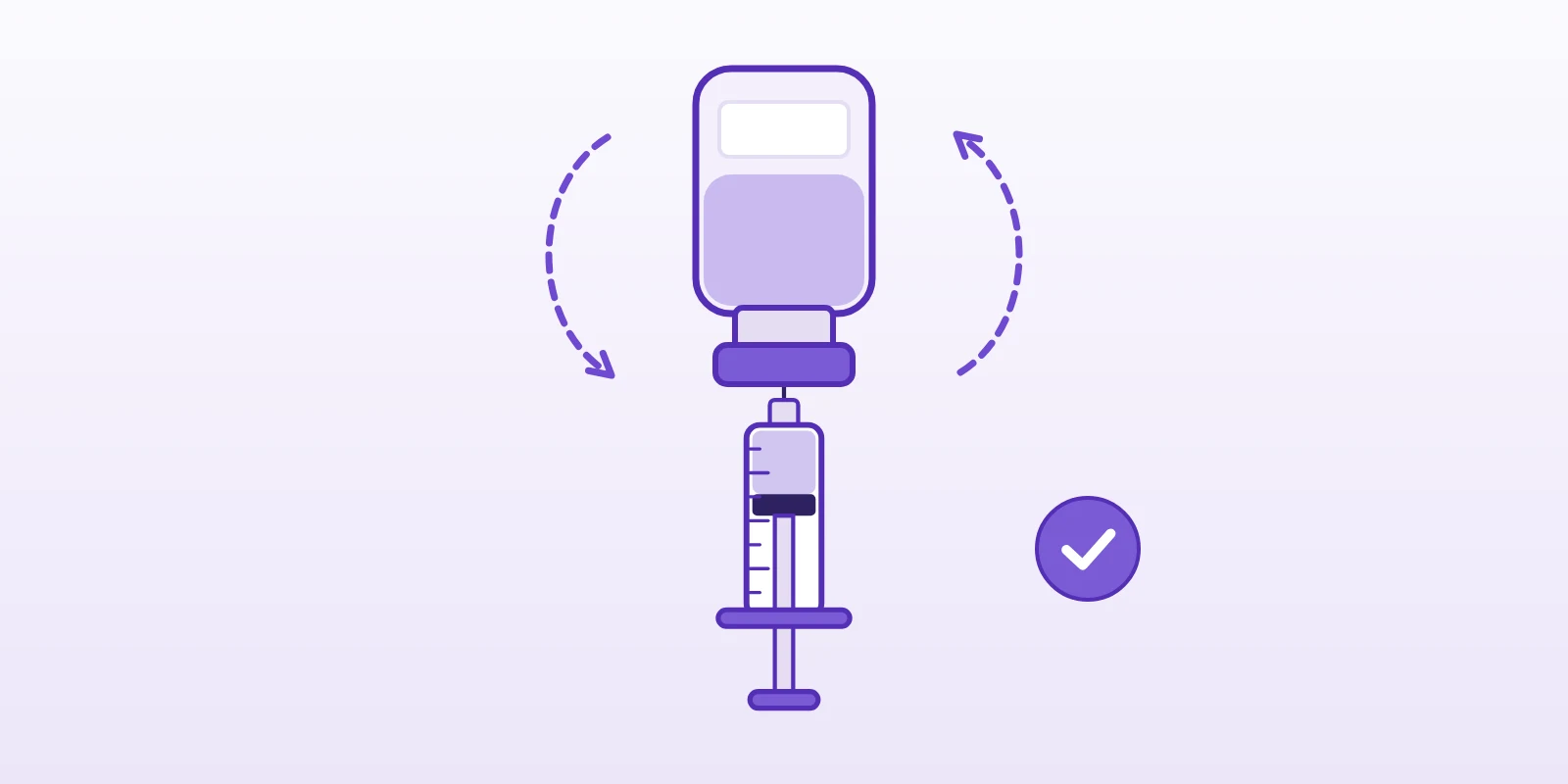
How to Draw Medication From a Vial Into a Syringe
November 25, 2026
7 min read
Monica Hodgson
syringes
injection-technique
peptide-therapy
A step-by-step guide to drawing medication from a vial: checking the vial, cleaning the top, adding air, drawing the right amount and getting rid of bubbles.
If your medication comes in a vial rather than a prefilled pen or syringe, you'll need to draw each injection into a syringe yourself. It looks fiddly the first time. Once you've done it a few times, it takes less than a minute.
To draw from a vial, clean the rubber top, pull air into the syringe equal to the amount you need, push that air into the vial, turn the vial upside down, then pull back the plunger to draw the medication in. Check for bubbles, remove them and check the amount again before you take the needle out.
The steps below follow the method MedlinePlus, the U.S. National Library of Medicine's health site, describes for drawing from a vial. Your pharmacist or medication leaflet may add steps for your product, and those come first. The amount to draw always comes from your prescription, never from a guide like this.
What You'll Need
| Item | Notes |
|---|---|
| Your vial | Check the label, expiration date and appearance first |
| A new syringe and needle | A new one every time |
| Alcohol pads | One for the vial top, and one for your skin |
| A clean, flat surface | Somewhere you won't be rushed |
| Sharps container | Within reach before you start |
Step 1: Wash Your Hands and Check the Vial
Wash your hands with soap and water. Then look at the vial:
If anything looks wrong, don't use it. Ask your pharmacist.
Step 2: Mix Only If Your Instructions Say So
Some medications need gentle mixing before you draw them up, and some don't. MedlinePlus gives an example of a cloudy medication that's rolled gently between the hands, with the instruction not to shake it, because shaking can damage some medications. Clear medications often don't need mixing at all.
Follow the leaflet for yours. If it doesn't say, ask your pharmacist rather than shaking it just in case.
Step 3: Clean the Rubber Top
If the vial is new, flip off the plastic cap. Wipe the rubber top with an alcohol pad and let it dry. MedlinePlus specifically says not to blow on it to speed it up.
Step 4: Pull Air Into the Syringe
Take the cap off the needle, being careful not to touch the needle or let it touch anything. Pull the plunger back to draw in air equal to the amount of medication you need.
Why add air? A sealed vial doesn't let air in. As you take liquid out, the pressure inside drops and the plunger gets harder to pull. Adding the same amount of air first keeps the pressure even, so the medication flows in smoothly.
Step 5: Push the Air Into the Vial
With the vial upright on the table, push the needle straight through the center of the rubber top. Push the plunger to send the air into the vial. Pushing it into the air space above the liquid, rather than into the liquid, helps avoid bubbles.
Optimize Your Peptide Therapy Journey
Take control of your peptide therapy with PeptideKit - the comprehensive app designed to help you track, monitor, and optimize your treatment:
- Add peptide therapy protocols with custom schedules that work for you
- Easy dose logging with customizable reminder notifications
- Body change tracking to monitor your transformation
- Progress visualization with charts and trend analysis
Download PeptideKit App
Scan with your iPhone camera
to download PeptideKit
Step 6: Turn It Upside Down and Draw
Keeping the needle in the vial, pick the vial up and turn it upside down, so the vial is above the syringe. Make sure the tip of the needle is below the surface of the liquid.
Pull the plunger back slowly to draw the medication in. Going slowly means fewer bubbles.
Step 7: Check for Air Bubbles
With the vial still upside down, look at the syringe. If you see air bubbles, tap the barrel gently so they rise toward the needle, push them back into the vial, then pull back to your amount again.
Our guide to air bubbles in a syringe explains why bubbles matter and more ways to deal with stubborn ones.
Step 8: Check the Amount and Remove the Needle
Hold the syringe at eye level and check that the edge of the plunger lines up with the correct mark. If you're not sure how to read the markings, our syringe units guide explains them.
Once it's right, turn the vial upright and pull the needle straight out. Don't let the needle touch anything before your injection.
Then inject straight away, following your usual technique. Our step-by-step guide to giving yourself a subcutaneous injection covers the rest.
Keeping the Vial Clean
A vial you use more than once needs a little care to stay safe:
Common Problems
The plunger is hard to pull. You probably didn't add enough air first. Push a little air in and try again.
Lots of bubbles. Draw more slowly, and make sure the needle tip stays below the surface of the liquid.
The needle tip keeps coming out of the liquid. As the vial gets low, pull the needle back slightly so its tip stays in the liquid near the rubber top.
The needle bent or touched something. Don't use it. Start again with a new one.
You drew too much. Push the extra back into the vial while it's still upside down, then check the amount again.
Tracking Your Vial
Knowing how much is left helps you plan when to start a new vial and when to reorder. The free supply calculator shows when a vial will run out, and PeptideKit tracks your vials as you log each shot.
Frequently Asked Questions
Why do you put air into a vial before drawing medication?
Adding air equal to the amount you'll draw keeps the pressure in the vial even, so the medication flows into the syringe smoothly and the plunger doesn't fight you.
Do you have to wipe the top of a vial?
Yes. Wipe the rubber top with an alcohol pad before each use and let it dry. MedlinePlus says not to blow on it.
Should you shake a vial before drawing it up?
Only if your instructions say to. Some medications are rolled gently and some don't need mixing at all, and shaking can damage some medications.
How do I get rid of air bubbles when drawing from a vial?
With the vial still upside down, tap the syringe so the bubbles rise, push them back into the vial, then draw back to your amount again.
Can I use the same syringe to draw from the vial twice?
No. Use a new needle and syringe each time you enter the vial, to avoid contaminating the medication left inside.
The Bottom Line
Drawing from a vial is a short routine: check the vial, clean the top, add air, turn it upside down, draw slowly, clear the bubbles and check the amount.
Go slowly, keep everything clean, use a new needle every time you enter the vial, and get your pharmacist to watch you do it the first time.
Always consult with qualified healthcare professionals before starting any peptide therapy protocol. This information is for educational purposes only and does not constitute medical advice.
Related Articles
How to Give Yourself a Subcutaneous Injection, Step by Step
A plain walkthrough of a subcutaneous (subQ) self-injection at home: what to lay out, how to choose and clean the site, how to insert the needle and what to do afterward.
Scared of Needles? How to Make Self-Injection Easier
Practical ways to get through self-injection when you're nervous about needles: preparing, calming your body, making the shot more comfortable, and when to ask for extra help.